


2026 Legislative Session Highlights: $60 M for Farmland Conservation, $70 M for Climate Smart Ag and Local Food Systems, and Goat Grazing Contractors Protected
-

October 12, 2026
-

Brian Shobe

The 2026 California legislative session is over and the deadline for Governor Newsom to sign bills has passed. Here at CalCAN, we’re celebrating some hard-fought wins amidst a tough budget year, including:
- $60 million for farmland conservation
- $70 million for climate smart agriculture and local food system programs
- Protected goat contract grazing in California
In this blog, we summarize the 2026 legislative session’s wins and losses, both for efforts that CalCAN led and CalCAN supported. Have questions about any of them? Email our Policy Director Brian [at] calclimateag.org.
State Budget Wins
The budget context for fiscal year (FY) 2026-2027 was another difficult one, with the state facing a budget deficit for the fourth year in a row, prompting the nonpartisan Legislative Analyst’s Office to diagnose the state’s negative fiscal situation as “chronic.” This situation was made worse by changes the California Air Resources Board made to the state’s Cap-and-Invest Program in May that reduced current and projected future investments in climate programs. That context made the following budget wins both remarkable and bittersweet:
$60 M for the Sustainable Agricultural Lands Conservation Program
The Sustainable Agricultural Lands Conservation Program (SALC) has funded the permanent protection of nearly 300,000 acres of agricultural land that were at risk of being developed since the program was established in 2014. The SALC program is also the third most cost-effective greenhouse gas reduction program out of 115 programs funded through the Greenhouse Gas Reduction Fund (GGRF), and is responsible for 20% of the GGRF’s total emission reductions despite historically receiving only 2% of its funding.
The final FY 26-27 budget includes a one-time appropriation of $50 million for SALC, plus an additional 20-33% of the “Sustainable Communities” GGRF allocation, which we estimate will be a minimum of $10 million in FY 26-27. This substantial investment would not have been possible without the leadership of Senate Budget Chair and former Natural Resources Agency Secretary John Laird, who has steadfastly championed the SALC program from its beginning. We also want to thank our partners at American Farmland Trust, who co-led this effort with us, and the many other land trust and conservation organizations who supported it.
“Over my quarter century in state government, I have worked for agricultural land protection in a number of ways – through bills I authored on the Williamson Act and the development of the Sustainable Agricultural Lands Conservation Program (SALC) during my time as Secretary for Natural Resources. In a challenging budget year, I am pleased that funding for SALC was included in the final budget. I’m grateful to American Farmland Trust, CalCAN, and the many others who worked with us throughout the budget process to secure continued state support for agricultural land protection.” — Senator John Laird (D-Santa Cruz)
$70 M for Climate Smart Ag and Local Food Systems Programs (Prop 4)
The $300 million in Proposition 4 funding that CalCAN secured in 2024 through our multi-year campaign with the Food and Farm Resilience Coalition continues to be allocated in tranches. This year, we supported the Governor’s proposed expenditure plan for Prop 4 funding, which was approved by the legislature and includes the following for FY 26-27:
- $25 million for the Healthy Soils Program
- $14 million for a new equipment-sharing program
- $9 million for year-round farmers markets
- $9 million for mobile farmers markets
- $14 million for a tribal food sovereignty program
$25 M for Farm to School, including Ongoing Funding for the Office of Agricultural Resilience and Sustainability
The Farm to School Program assists educational institutions in procuring locally grown, minimally processed food, creating new markets for California farmers. In order for producers to participate in Farm to School, they must use climate smart practices, which are supported through incentives and technical assistance provided by the California Department of Food and Agriculture’s (CDFA) Office of Agricultural Resilience and Sustainability (OARS). However, funding for Farm to School and OARS has depended on unreliable, one-time appropriations. This year, we supported the Governor’s proposal to make funding for both Farm to School and OARS permanent, and are excited the proposal was approved by the legislature and included in the final budget. This ongoing funding provides important stability for OARS, which also administers CDFA’s Climate Smart Agriculture programs.
State Budget Losses
Earlier this year, we requested $50 million for CDFA’s Alternative Manure Management Program (AMMP) from the “discretionary” portion of GGRF to support dairies with implementing manure management technologies and practices that reduce methane emissions, reduce water use, improve water quality, and produce compost.
AMMP has played an important role in progress toward California’s 2030 methane reduction target set by SB 1383 (Lara, 2016). Without assistance, many dairies cannot invest in improved manure management, as the industry faces an increasingly challenging economic climate marked by low milk prices that fall well below rising input costs.
This budget request was made in collaboration with dairy partners in our network, who joined us for an AMMP-focused lobby day in the spring, as well as Senator Jerry McNerney and Assemblymember Damon Connolly, who championed AMMP funding in their respective chambers and budget committees. But in the end, reductions in GGRF revenue left AMMP and most other “discretionary” GGRF programs stranded without funding.
We will continue advocating for this program next year, especially in light of the updated Dairy Order that was approved by the State Water Board in September, which will effectively require many dairies in the San Joaquin Valley to implement alternative manure management practices in order to comply with water quality regulations.
State Legislative Wins
CalCAN sponsored two bills and took positions on nine other bills this year on a wide range of agricultural and climate issues. A few of the highlights include:
(AB 187) Protected Goat Grazing for Wildfire Resilience and Weed Management
Building on CalCAN’s successful effort to establish prescribed grazing as a key element of the state’s wildfire resilience strategy in 2024, CalCAN co-led an agricultural, environmental, local government, and firefighting coalition this year to keep goat contract graziers in business and maintain the critical wildfire risk reduction and invasive and noxious weed management services goats provide.
This effort was necessitated by a bill passed in 2023 that established a sunset on wage parity for goat and sheep herders, effective July 1, 2026, and that required the California Department of Industrial Relations (DIR) to develop a report on goat and sheep herder employment. In March, DIR published their required report, which found that “Stakeholders [ranchers, herders, and worker advocates] agreed that the same alternative minimum monthly wage should apply to sheep and goat herders because the workers and work are similar and often overlap.”
Despite this consensus, the legislature failed to act by June 30 to restore wage parity for goat and sheep herders. This lack of legislative action, combined with existing labor laws, regulations, and interpretations, had the truly bizarre and unintended effect of increasing minimum goat herder wages to approximately $240,000 per year. If allowed to continue, such unsustainable wages would have resulted in the immediate loss of dozens of prescribed grazing businesses, hundreds of goat and sheep herders’ jobs and livelihoods, and hundreds of thousands of acres of weed abatement and wildfire fuels reduction treatments in California.
Thankfully, our coalition, with the help of Senator Blakespear, who became a champion of prescribed grazing after an in-district prescribed grazing tour with CalCAN, overcame the resistance of one of the most influential lobbying groups in Sacramento and restored goat and sheep herder wage parity… for now. As the result of a legislative compromise with the aforementioned lobbying group, AB 187 only extends goat and sheep herder wage parity through January 1, 2029, meaning this existential threat to prescribed grazing businesses will come back around in two years.
(AB 35, Alvarez) Streamlined Prop 4 Implementation
After the first tranche of Prop 4 funding was allocated to state agencies in 2025, a number of those agencies, including the Department of Food and Agriculture, began highlighting concerns that Prop 4’s requirement to follow the Administrative Procedures Act (APA) standard process would delay implementation of Prop 4-funded programs – including existing programs – by 12 to 18 months and make the programs less flexible and responsive to stakeholder feedback. In response to these concerns, CalCAN joined a large coalition of organizations in calling for an exemption to the APA for Prop 4 programs, which was enacted in July through AB 35. This means that agencies will face less regulatory delays in rolling out both FY 25-26 and newly allocated FY 26-27 Prop 4 funding.
(AB 1731, Wilson) Verified Climate Smart Supplier List for Public Food Procurement
California’s public institutions purchase and serve millions of meals. A growing number of these institutions, such as schools participating in the Farm to School Program, want to support local farmers using climate smart practices, but face challenges in navigating regional supply chains and verifying on-farm practices. AB 1731, which was authored by Assemblymember Lori Wilson and co-sponsored by CCOF and Fullwell, aims to mitigate these challenges by requiring CDFA to develop an approved list of suppliers offering whole or minimally processed California-grown foods produced using climate-smart agricultural practices. According to the bill, eligible suppliers may include farms, food hubs, and regional distributors serving schools, hospitals, universities, correctional facilities and other public institutions that purchase food with public dollars. CalCAN joined a large coalition of sustainable agriculture organizations and farms in supporting the bill. CDFA’s Office of Farm to Fork is now tasked with implementing the bill.
State Legislative Losses
Unfortunately, our two sponsored bills died in the Assembly Appropriations committee in May due to reductions in GGRF revenue and the budget deficit.
(AB 2184, Wilson) Bill to Establish Permanent Funding for Nature-Based and Agricultural Climate Solutions Thwarted by Reduced GGRF Revenues
This bill would have allocated $150 million annually from the state’s GGRF to support farmers in adopting multi-benefit practices, such as healthy soils, irrigation efficiency, and alternative manure management practices, that reduce input costs and increase economic and climate resilience. The bill would also have allocated $250 million annually from GGRF to support land stewards across the state in restoring healthy watersheds and ecosystems, which are critical to our state’s water supply and resilience to droughts, floods, and wildfires. While these allocations would have been possible under previously projected GGRF revenues, changes the California Air Resources Board made to the state’s Cap-and-Invest Program in May significantly reduced projections for future GGRF revenue and rendered the bill moot.
AB 2184 was authored by Assemblymember Lori Wilson, was co-sponsored by CalCAN, The Climate Center, and River Partners, and was supported by a coalition of over 40 agricultural, climate, and conservation organizations.
(AB 2100, Connolly) Alternative Manure Management Program Task Force Bill Stymied by Budget Deficit
This bill would have directed CDFA to convene an interagency task force to evaluate the role alternative manure management practices will need to play in achieving the state’s methane, water quality, healthy soils, and organic transition goals. The bill would have also required the task force to facilitate interagency data sharing, identify research needs, and advise the California Air Resources Board on updates to its quantification methodology for AMMP to ensure the program’s benefits are fully measured, considering the most recent relevant data and research, which we wrote about in the AMMP report we published in February. Lastly, the bill would have directed CDFA to convene relevant agencies to create an efficient and effective process for approving new projects that manage livestock and dairy manure through on-farm composting. AB 2100 was sponsored by CalCAN and supported by a coalition of dairy, climate, and conservation organizations.
While we are disappointed our AMMP bill died earlier this year, we are happy to report that we have made some significant progress towards the objectives of the bill through subsequent administrative and regulatory advocacy. This progress is summarized here.
- In late May, we submitted a detailed, 16-page comment letter to CARB in response a solicitation for information to help CARB evaluate methane emissions data and methane mitigation strategies.
- This summer, CDFA and CalRecycle initiated the development of a statewide Compost Strategy to increase the availability and affordability of high-quality compost in the state, and agreed to consult with dairy stakeholders and include dairy manure composting in the scope of the strategy.
- In September, the State Water Board included some of our recommended changes to the new Dairy Order, including committing to “actively support efforts to develop sustainable markets for dairy manure” and “coordinate with… the California Air Resources Board, CalRecycle, the United States Department of Agriculture, Natural Resources Conservation Service, and other relevant agencies.”
As noted earlier, we will continue to advocate for incentives to support dairy producers in complying with both methane and water quality regulatory targets.
Next Year: New Governor, New Opportunities
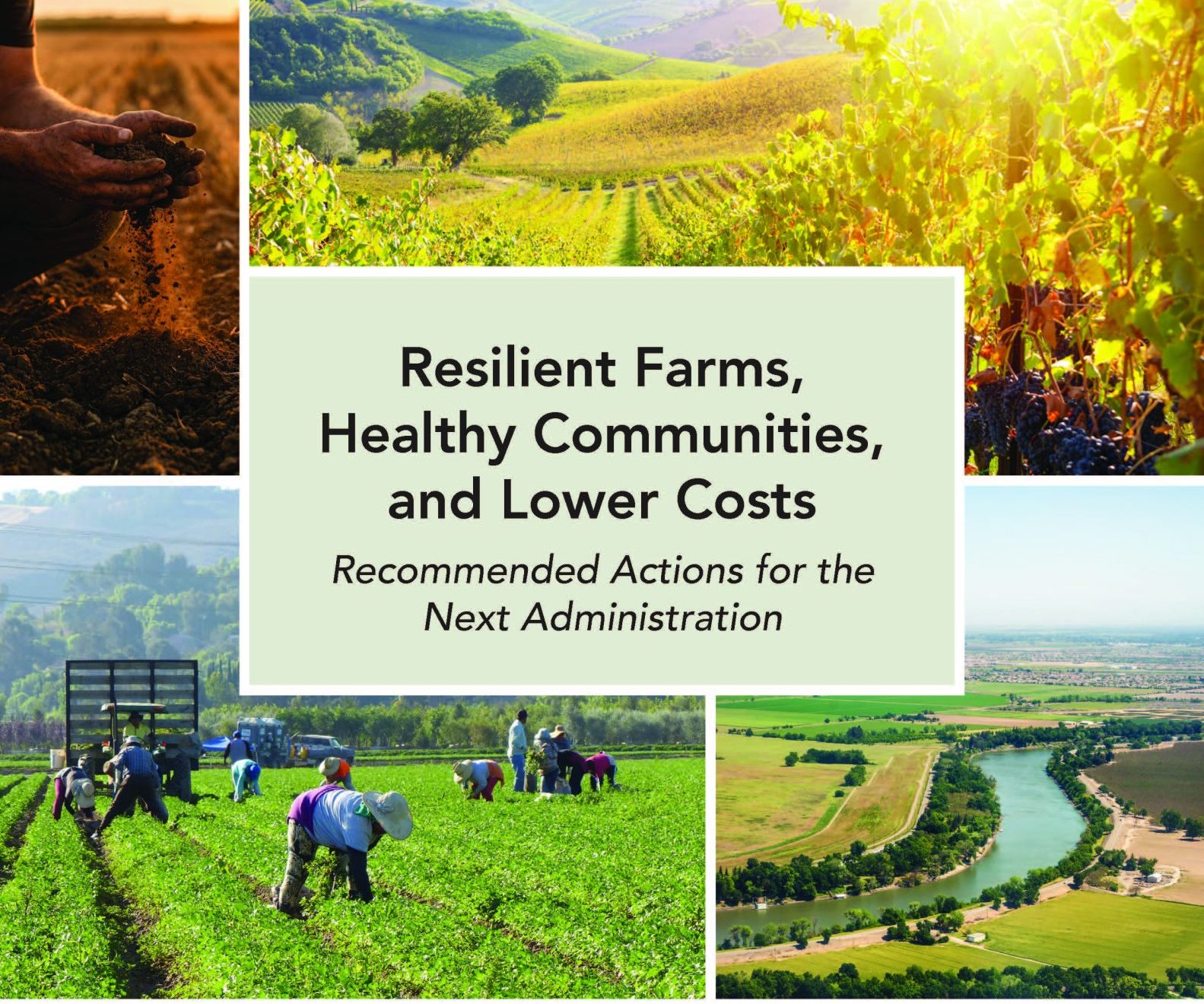
Advocacy never stops, so we are already laying the groundwork for next year’s campaigns, including putting out recommendations for the next California governor. You can read more about those recommendations on our recent blog post. Want to support next year’s efforts? Send a note to our Policy Director Brian [at] calclimateag.org.
Discover more from CalCAN - California Climate & Agriculture Network
Subscribe to get the latest posts sent to your email.
Related Articles

CalCAN Releases Recommendations for the Next Governor and Administration
September 30, 2026


Sign Up For Our Newsletter
"*" indicates required fields