


Achieving Clean Water and Climate Goals through Healthy Soils Management in the Irrigated Lands Regulatory Program
-

September 25, 2026
-

Anna Larson
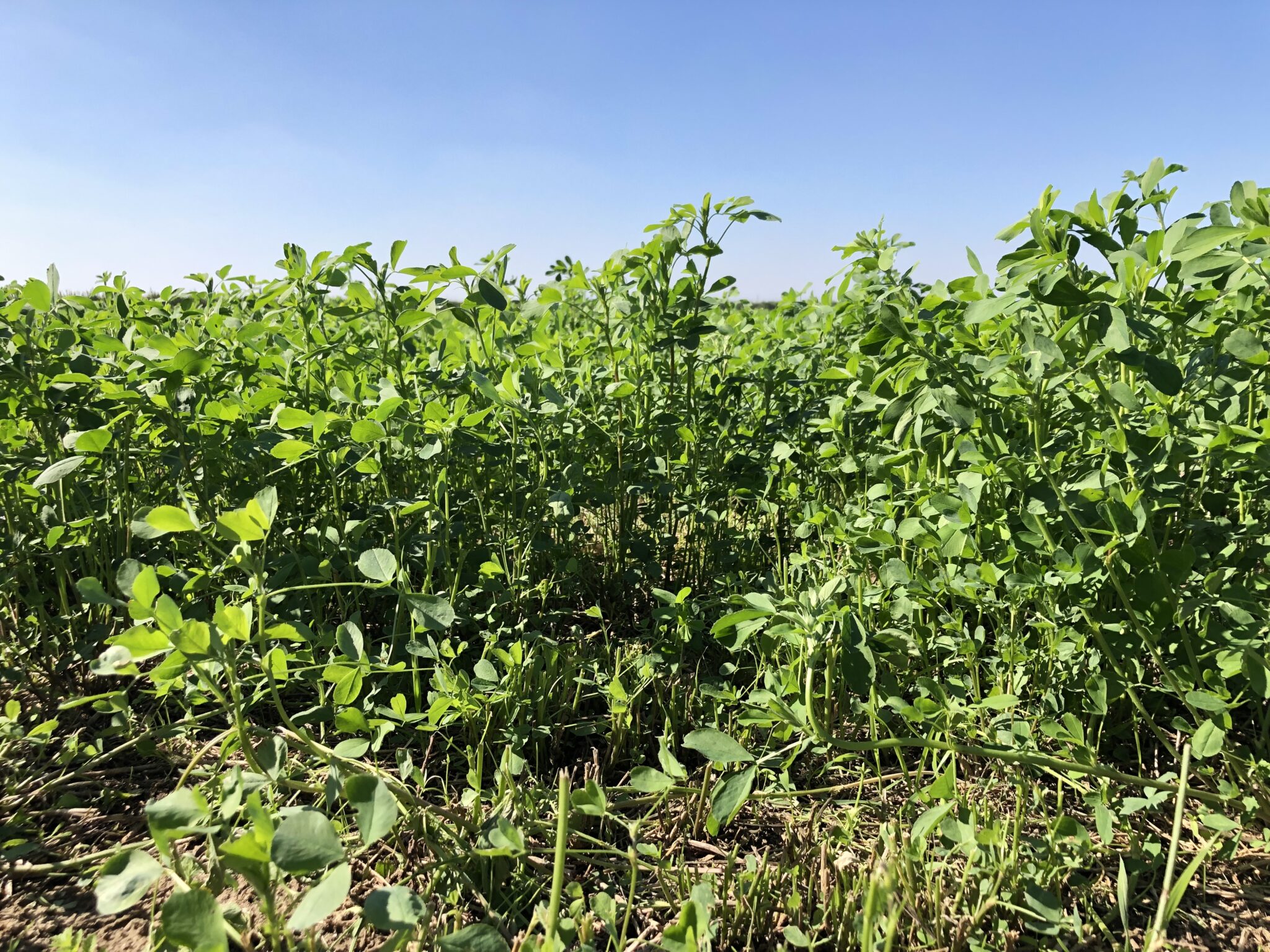
Farms’ nitrogen management approaches have impacts on water quality, soil health, nitrous oxide emissions, and farms’ climate resilience and viability. Synthetic fertilizer is increasingly expensive to buy, exacerbated by the U.S. war with Iran, and energy-intensive to produce, with the global fertilizer supply chain responsible for 2.1% of the world’s GHG emissions. In California, synthetic fertilizer application is responsible for 16% of agricultural GHG emissions1, and results in nitrate leaching into drinking water that contributes to various health impacts such as blue baby syndrome and cancer.2 Synthetic fertilizer overapplication can also be harmful for soil health by decreasing soil organic matter content, nutrient retention, and soil microbial activity, and by increasing soil compaction and pests, among other impacts.
The Irrigated Land Regulatory Program (ILRP) is a water quality regulatory program in California that affects approximately half of the farms and three-quarters of irrigated cropland in the state. The State Water Resources Control Board is currently considering potential changes to ILRP, which presents an opportunity to think strategically about how to ensure the state’s water quality and climate goals and regulations work together and support farmers and agricultural viability in the transition to a more healthy, just, and resilient agricultural system.
This blog provides an update on CalCAN’s ongoing advocacy related to ILRP, including some exciting progress that occurred earlier this summer. Since this is the first time we are writing about this complex regulatory topic in a while, we start with some history and context on the program.
History and Context of the Irrigated Lands Regulatory Program (ILRP)
California’s Porter-Cologne Water Quality Act, passed in 1969, enshrines the right of Californians to safe, clean, affordable, and accessible drinking water3. In 1999, the State Water Resources Control Board (State Board) was directed by additional legislation to regulate agricultural runoff into surface and groundwater, and subsequently developed the Irrigated Lands Regulatory Program.
The program is implemented through the state’s nine Regional Water Quality Boards created by the Porter-Cologne Act, which issue their own Waste Discharge Requirements (WDRs) or conditional waivers of WDRs to growers with commercial operations on irrigated croplands, collectively referred to as Orders. The boards’ responsibilities include oversight of nitrogen discharges from irrigated agricultural lands. Around 29,000 farms with over six million acres are enrolled in the ILRP4.
Central Coast Regional Water Board’s Ag Order 4.0 (2021-2023)
In 2021, the Central Coast Regional Water Board implemented a local order under ILRP, called Ag Order 4.0, that established a new nitrogen management regulatory framework and included incentives for the use of healthy soils practices like cover crops and compost to acknowledge their benefits in reducing nitrate leaching.
In 2023, following petitions from both agricultural and environmental justice stakeholders contesting different aspects of the order, the State Board remanded (i.e., sent back) the order to the Regional Board and stated their intention to convene an Agricultural Expert Panel to review various scientific questions related to Ag Order 4.0 and other aspects of ILRP.
The State Board had previously convened an Agricultural Expert Panel in 2014 to review aspects of ILRP. Based on the First Agricultural Expert Panel’s recommendations, the State Water Board established significant new statewide precedential requirements for ILRP. That experience suggested that the Second Agricultural Expert Panel could similarly significantly influence the future of ILRP.
The Second Agricultural Expert Panel (2025-2026)
The Second Agricultural Expert Panel (the Panel) was convened in 2025 and composed of eight California public researchers and extension specialists. The Panel was tasked with reviewing the current science on measuring and understanding nitrogen management and leaching risks and producing a written report of their findings. The Panel met between fall 2025 to spring 2026 to evaluate whether there were sufficient data and scientific research to set crop-specific limits on nitrogen usage or discharge, whether the Central Coast Regional Water Board’s healthy soils incentives were appropriate, and who should be eligible for alternative reporting structures. You can see the full list of questions that the State Board asked the Panel on the State Board’s website.
CalCAN’s Recent ILRP Advocacy, Progress, and Next Steps
The IRLP presents an important opportunity to catalyze the adoption of healthy soils practices to reduce synthetic fertilizer use and associated GHG emissions and improve water quality. To effectively and equitably achieve this, it is critical that the program’s reporting structures reflect the variety of cropping systems and management approaches across the state, and that the program does not disproportionately burden small and/or diversified farmers. CalCAN engaged in the Panel process to encourage and support the panelists in considering these objectives.
What did we learn?
We began by speaking with a number of Central Coast growers and technical assistance providers about their experience with the program, both in its prior iteration that incentivized healthy soils practices and in the current version of the program that does not. Many of these small and mid-scale diversified and organic farms are using healthy soils practices, but found it burdensome to complete the required paperwork and calculate nitrogen application for each individual crop they grow. Many spoke to a need for additional outreach and technical assistance to help farmers comply, especially for small growers that are not able to access information in their primary language and do not have computer literacy. Additionally, farmers expressed frustration that the reporting format is oriented towards farmers that apply synthetic chemicals, and does not map well onto organic and/or diversified farms. This feedback informed our engagement with the Panel.
What did we recommend?
CalCAN participated throughout the Panel process, contributing verbal and written recommendations. Throughout the process, we highlighted the potential for ILRP to promote the new adoption of healthy soils practices and reward continued healthy soils management, while emphasizing the need for alternative reporting for small, diversified, and/or reduced-risk farms who use practices that reduce leaching risk.
Here are the recommendations we suggested:
1. We asked the Panel to encourage Regional Water Boards to incentivize healthy soils practices like cover cropping and composting.
This included supporting the reinstatement of the Central Coast Regional Water Board’s use of credits and discounts for cover cropping, compost, organic soil amendments, and high carbon amendments as previously allowed under the Central Coast’s Ag Order 4.0, as well as inclusion of additional cover crop strategies associated with reduced leaching. We also encouraged the Panel to consider how other regions could incorporate incentives for healthy soils management into their programs, and update these incentives as new research becomes available.
2. We supported the creation of a reduced-risk farm approach that allows growers using practices associated with reduced leaching to be eligible for alternative compliance pathways.
We suggested that this path be available to mid-scale farms in addition to small farms, and to weight practices by impact. We also supported CCOF’s recommendation to allow certified organic producers to demonstrate their utilization of reduced risk farming practices through their Organic System Plan in order to qualify. We supported a simplified reporting method, such as the method implemented by the King’s River Coalition5, that is regionally tailored to reflect the local agricultural context in terms of cropping systems, farm size, and operator demographics.
3. We supported alternative compliance and simplified reporting for small farms that face disproportionate administrative barriers.
For small farms that do not qualify as reduced risk but still face administrative barriers in reporting, we suggested using an alternative simplified reporting pathway that complies with ILRP while reducing reporting burdens.
4. We suggested that ILRP should be considered in the broader context of California’s climate goals and other agricultural regulatory programs.
ILRP, while focused on water quality, will have increasingly significant impacts on farm viability, and intersects with the state’s climate goals related to healthy soils, nitrous oxide emissions, livestock methane, and carbon neutrality. As the State Board considers potential changes to ILRP, there is an opportunity to think strategically about how to ensure the state’s water quality and climate goals and regulations work together and support farmers and agricultural viability.
For example, coordination between ILRP, the Dairy Order (which regulates dairy manure management and land application), and state incentive programs like the Alternative Manure Management Program and Healthy Soils Program, could help create a more circular nitrogen economy where composted manure replaces a significant portion of imported synthetic fertilizer, improves soil health, and reduces multiple sources of GHG emissions, groundwater pollution, and regulatory costs at the same time.
For more information on how improved management and distribution of surplus manure can protect water quality and reduce fertilizer costs, see the CalCAN guest blog by Sarah Castle, Senior Scientist at Sustainable Conservation.
5. Emphasized that research needs should be coordinated with other relevant state agencies and departments.
We see alignment between measurement of nitrogen lost in gaseous form on agricultural lands and the California Air Resources Board’s GHG inventory (required by AB 32), Natural and Working Lands inventory, and AB 1757 mandate (which includes estimating nitrous oxide emissions). While CDFA’s Fertilizer Research and Education Program (FREP) has already funded many projects that have informed ILRP, more direct coordination could help identify and fill remaining research gaps. CDFA’s Office of Agricultural Resilience and Sustainability manages the Climate Smart Agriculture programs, including funding for demonstration projects that study greenhouse gas emissions and economic impacts of healthy soils practice adoption. Coordination is essential to maximize state resources towards meeting these interrelated state goals.
What did the Panel’s final report to the State Water Board say?
Excitingly, the Panel’s final report, released in June, reflects many of our priorities around supporting healthy soils management and alternative compliance for small and reduced risk farms, including the following:
- Affirms the validity of the Central Coast Ag Order 4.0’s healthy soils discounts and credits, and recommends additional cover crop strategies be included, such as fall-grown cover crops, low residue cover crop practices, and cereal-legume cover crop mixes
- Accounts for nitrogen lost as gaseous loss on agricultural lands in regions that do not currently account for it
- Directs Regional Water Boards to provide standard grower templates to simplify reporting
- Offers a simplified reporting pathway for small farms
- Creates a baseline “reduced risk small farm” definition that allows regions to tailor their definitions to their local production context, and suggests to the State Board that the reduced risk framework consider weighting certain practices more highly
While the Panel noted it would be useful to explore a reduced risk category independent of farm size, their proposed definition focused on reduced-risk small farms.
The Panel’s final report also includes recommendations around setting nitrogen targets and limits, and appropriate methodologies for estimating potential nitrate discharge to groundwater.
What happens now?
The State Water Board is now in the process of soliciting additional feedback from the regional boards on the questions considered by the Agricultural Expert Panel, and then will engage in a formal regulatory rulemaking process. We plan to continue advocating for the implementation of those recommendations in coordination with many of the farmers, sustainable agriculture advocates, researchers, and clean water advocates we have collaborated with over the past year.
While the Agricultural Expert Panel affirmed the scientific validity of the Central Coast Regional Water Board’s approach regarding healthy soils discounts and credits, the State Water Board has not yet provided updated official guidance that would allow the Central Coast Regional Water Board to reinstate their incentives. This could happen through the state’s rulemaking process.
This is a complex and evolving issue, so if you have questions or would like to receive any updates after the time of this writing, please reach out to CalCAN’s Associate Policy Director, Anna Larson, by emailing anna [AT] calclimateag.org.
- https://ww2.arb.ca.gov/sites/default/files/2024-09/nc-2000_2022_ghg_inventory_trends.pdf ↩︎
- https://ucanr.edu/blog/pure-water-matters-your-essential-guide-drinking-water-quality/article/unsafe-drinking-water ↩︎
- https://www.waterboards.ca.gov/laws_regulations/docs/portercologne.pdf ↩︎
- https://www.waterboards.ca.gov/water_issues/programs/agriculture/ ↩︎
- https://www.waterboards.ca.gov/board_info/agendas/2024/oct/100124_5_edrpt.pdf ↩︎
Discover more from CalCAN - California Climate & Agriculture Network
Subscribe to get the latest posts sent to your email.
Related Articles


CalCAN Releases Recommendations for the Next Governor and Administration
September 30, 2026


Sign Up For Our Newsletter
"*" indicates required fields