


Novedades legislativas de primavera de 2025: repaso a mitad de temporada de los proyectos de ley y las campañas
-

11 de abril de 2025
-

Brian Shobe
Every winter, California legislators introduce approximately 2,500 bills before the bill introduction deadline in mid-February. In March, April, and May, policy committees and advocates review those 2,500 bills and decide which to advance, amend, and block. Yesterday, the legislature started its weeklong spring recess, which gives legislators, their staff, and advocates a brief moment to regroup before entering another month of bill and budget hearings, lobbying, and negotiations.
Mid-Season Bill Update
CalCAN has taken positions on six bills so far this spring. These bills, if enacted, would enshrine recently developed targets for natural and working lands climate solutions in law, expand technical assistance for farmers adopting climate smart practices, support farmers in transitioning to organic systems, remove regulatory barriers to on-farm composting, and increase funding for farmland conservation.
The bills below are just a handful of the nearly 100 bills CalCAN staff are tracking in some way, and CalCAN will likely take positions on a number of other bills before spring is over. If there’s a bill you’ve heard about that you have questions about or want us to consider engaging with, drop us a line.
Bills CalCAN Supports:
AB 491 (Connolly) – Natural & Working Lands Climate Targets
This bill, which is sponsored by Pacific Forest Trust, puts the state’s nature-based climate solutions targets, which were establecido el año pasado por la administración Newsom como exige AB 1757 (C. Garcia, 2022), in statute so they have some staying power after Governor Newsom terms out in 2026. As a reminder, those targets include the following:
- Aumentar la superficie ecológica certificada a 10% en 2030, 15% en 2038 y 20% en 2045.
- Aumentar la adopción de prácticas de suelos sanos en 140.000 adicional acres/año para 2030; 190.000 adicional acres/año para 2038; y 190.000 adicional acres/año en 2040
- Conservar 12.000 adicional acres/año de tierras de cultivo para 2030; 16.000 adicional acres/año para 2038; y 19.500 adicional acres/año en 2045
- Conservar 33.000 adicional acres/año de praderas para 2030 y mantener ese ritmo hasta 2045
AB 947 (Connolly) – Climate Smart Ag Technical Assistance
This bill would make a number of changes to the Climate Smart Agriculture Technical Assistance Program, initially established by AB 2377 (Irwin, 2018) that have been proposed by stakeholders based on their experience with the Program over the past seven years, including the following:
- Expands the definition of technical assistance and list of eligible technical assistance activities to include conservation planning, matching funds coordination, translation, access to equipment, and environmental compliance.
- Clarifies that technical assistance grants can be used to provide assistance to farmers and ranchers over multiple grant application cycles (e.g. if the Healthy Soils Program, State Water Efficiency & Enhancement Program, or Alternative Manure Management Program have grant solicitations multiple years in a row).
- Allows the California Department of Food and Agriculture (CDFA) to support training and capacity building within technical assistance provider organizations and coordination between organizations to improve the quality, consistency, and reach of technical assistance to farmers and ranchers across the state and to help farmers and ranchers access all relevant state and federal programs.
AB 937 (Connolly) – Organic Transition Program
This bill, which is sponsored by CalCAN member California Certified Organic Farmers (CCOF), will make a number of changes to the state’s Programa piloto de transición ecológica basándose en la experiencia adquirida con el programa hasta la fecha:
- Aumenta la cantidad permitida para costes administrativos a 25% para tener en cuenta la complejidad de proporcionar un apoyo integral a los agricultores, incluida la asistencia técnica individualizada y la planificación empresarial.
- Permite un apoyo más completo a la transición ecológica combinando los componentes de transición ecológica del Programa de subvenciones para la planificación de la agricultura de conservación en el Programa piloto de transición ecológica.
- Aumenta la capacidad de los proveedores de asistencia técnica para garantizar un apoyo sólido a los agricultores en transición a la agricultura ecológica.
SB 279 (McNerney) – On-Farm Composting Regulations
This bill, which is co-sponsored by several advocacy and commodity groups, removes a number of longstanding regulatory barriers to increasing the production and sale of compost on farms and ranches, including the following:
- Increases the volume of on-site feedstock materials allowed from 100 to 500 cubic yards for composting operations which fall under the “excluded tier” (the lowest tier) under CalRecycle regulations (see sección 17855 del Título 14 del CCR)
- Makes the composting of ag materials from a “large-scale biomass management event,” including orchard/vineyard removal and crop rotation, and the blending of those materials with manure an excluded activity under CalRecycle regulations
- Increases the volume of compost a composting operation may sell from 1,000 to 5,000 cubic yards annually while still remaining in the “excluded tier” (where applicable under section 17855) or “enforcement agency notification tier” (for composting operations on agricultural land per sección 17856(d)(1) del Título 14 del CCR)
AB 411 (Papan) – Livestock Carcass Composting
This bill, which is sponsored by the California Cattlemen’s Association, would authorize small-scale on-farm composting of routine livestock mortalities and butcher waste under best management practices (BMPs) adopted by CDFA in consultation with the State Water Resources Control Board and CalRecycle.
Bill CalCAN Supports – If Amended:
SB 462 (Cortese) – California Farmland Conservancy Program
This bill, which is sponsored by the Santa Clara Valley Open Space Authority, would require the state to allocate $20 million per year from the General Fund for the Programa de Conservación de Tierras Agrícolas de California pero excluiría permanentemente las tierras de pastoreo de este fondo. Como escribimos en nuestro carta de apoyo si se modifica, we appreciate Senator Cortese’s leadership to uplift farmland conservation by attempting to create an on-going funding source for the program and would support the bill if amended to remove the exclusion of grazing lands.
Earlier this year on our blog, we wrote about:
- the Governor’s proposed FY 25-26 budget and the critical role Proposition 4 is playing in funding a number of programs, including the Programa de suelos sanos y SWEEP
- the legislature’s early discussions on reauthorizing the Cap-and-Trade Program and reallocating the resulting revenue
- nuestra lobby day to support our campaign to secure 15% of the state’s Greenhouse Gas Reduction Fund (GGRF) for a portfolio of agricultural climate solutions
We have a few updates on those topics.
AMMP Funding:
First, CalCAN submitted a budget letter to the legislature supporting the administration’s proposed Proposition 4 expenditure plan and calling for the legislature to increase funding for the Programa alternativo de gestión del estiércol (AMMP) from $7 million to $50 million in FY 25-26, citing four arguments:
- Reducing dairy methane is critical to achieving climate targets and climate resilience
- AMMP is one of GGRF’s most cost-effective programs and a preliminary analysis shows that the cost-effectiveness is higher than previously estimated
- AMMP projects produce compost needed to reduce reliance on fossil fuel-based fertilizers
- AMMP is oversubscribed and is the primary source of funding for methane-reducing technologies on small and mid-scale dairies
GGRF Campaign:
We also submitted a letter on behalf of a growing coalition of agricultural and food system organizations to legislators leading Cap-and-Trade negotiations to make the case for investing 15% of the state’s Greenhouse Gas Reduction Fund (GGRF) in a portfolio of agricultural climate solutions. That case centers on a few key arguments:
- California has agricultural climate targets but is not on track to meet them
- Existing programs can help us meet those targets, but need consistent funding
- Agricultural climate solutions are some of the most cost-effective GHG reduction solutions and offer a multitude of economic, environmental, food security, public health, and climate resilience co-benefits
- Agriculture has been underfunded relative to its GHG emissions and GHG reduction potential
Want to sign your organization onto that letter? Send Brian a note.
ICYMI: The Sacramento Bee published an op-ed earlier this week amplifying our GGRF ask and rationale, and we encourage you to check it out and share it on your social media: “California has a golden opportunity to fund climate smart agriculture.”
As we move into the second half of the legislative session, we’ll continue tracking and weighing in on these key issues. Stay tuned for more updates, and as always, we welcome your input and collaboration.
📬 Questions about a bill or want us to consider engaging with a bill/issue not listed above? Drop us a line — we’d love to hear from you.
Descubre más desde CalCAN - California Climate & Agriculture Network
Suscríbete y recibe las últimas entradas en tu correo electrónico.
Artículos relacionados

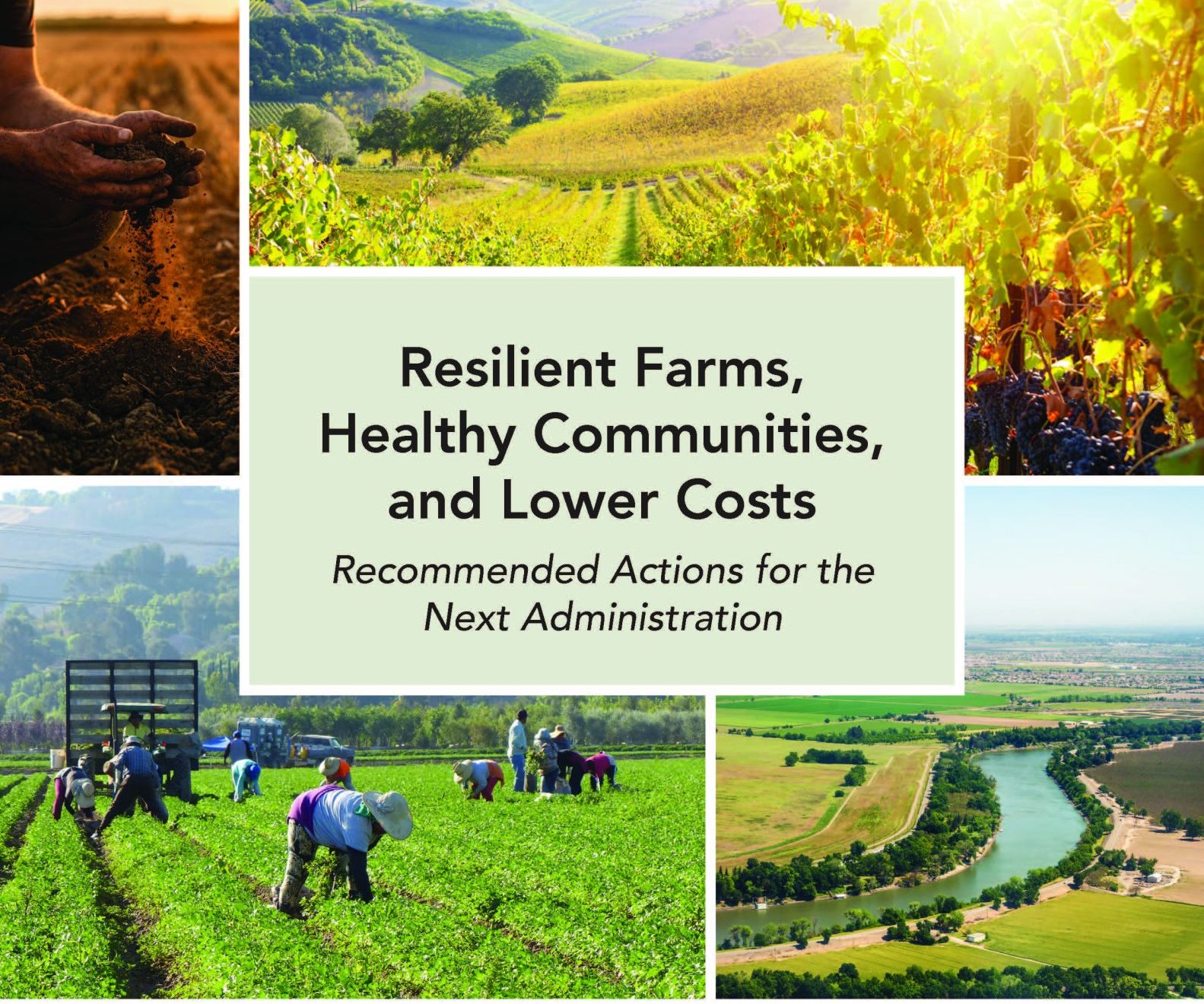

CalCAN Releases Recommendations for the Next Governor and Administration
septiembre 30, 2026


Suscríbase a nuestro boletín
"*" indica los campos obligatorios