


Proposed Cap-and-Invest Regulations and Structural Budget Deficit Threaten Progress on Climate Solutions
-

mayo 27, 2026
-

Brian Shobe

California has long been a climate leader on the national and international stage, including in the agricultural sector. The state has set ambitious climate goals for nearly every sector of the economy, including agriculture, and has invested miles de millones de dólares from its Greenhouse Gas Reduction Fund (GGRF) in the past decade to achieve those goals, with real results. Since 2004, California’s greenhouse gas (GHG) emissions have been reduced from their peak by nearly 25% while the state’s gross state product (GSP) has grown by approximately 80%, proving that climate action and economic growth can be complementary.
But recently proposed regulations for the state’s Cap-and-Invest Program, combined with a multi-year structural budget deficit, are threatening future progress on a wide array of climate solutions across multiple sectors, from transportation to agriculture.
In this blog, we summarize these changing policy conditions, their potential impact on climate investments and legislation, and how CalCAN is responding to this moment in collaboration with many of our partners who are similarly affected by these challenges.
Proposed Cap-and-Invest Regulations Could Cut Climate Investments in Half
As a result of last year’s reauthorization of the Cap-and-Invest Program, the California Air Resources Board (CARB) staff are proposing new regulations to update the Program, which are scheduled to be voted on by the CARB Board on May 28. Some of these new regulations align with climate reforms we advocated for in 2025, like shifting natural gas utility bill credits to electric utility bill credits and putting carbon offsets “under the cap.”
However, CARB is also proposing some regulatory changes that would subsidize the fossil fuel industry, weaken the climate integrity of the program, and dramatically reduce investments in climate solutions. The Legislative Analyst’s Office (LAO), which provides nonpartisan analyses to the state legislature, as well as other independent expert analyses, estimate these changes would both reduce the certainty that the state will meet its 2030 GHG reduction target and cut the state’s Greenhouse Gas Reduction Fund (GGRF) revenue in half.
According to the LAO, that cut to GGRF would effectively defund a number of priority programs the Governor and legislature just agreed to fund as part of the “invest” side of Cap-and-Invest last year, including programs to support wildfire resilience, safe and affordable drinking water for primarily rural and farmworker communities, and farmland conservation (via the Sustainable Agriculture Land Conservation Program, aka SALC), to name a few.
“If it turns out that a net effect of these changes reduces [the] Greenhouse Gas Reduction Fund by $1 or $2 billion dollars, it flies against many things we negotiated just last fall. And further, it would put everything back on the table… This is a big deal.” – Senator John Laird, Chair of the Senate Budget Committee, at a May 6 Cap-and-Invest oversight hearing.
Other agricultural climate programs, like the Alternative Manure Management Program, Healthy Soils Program, and State Water Efficiency and Enhancement Program have historically been funded on a discretionary basis. This has meant that these programs are often at the “back of the line” for GGRF investments, leading to inconsistent funding. If CARB moves forward with the proposed Cap-and-Invest regulations and GGRF funding is cut in half, these agricultural programs would face even stiffer competition over “half the pie,” creating a bleak outlook for future funding.
The uncertainty caused by CARB’s proposed regulations has already had an impact on our attempts to secure additional funding for these programs. A bill CalCAN was co-sponsoring (AB 2184, Wilson) to secure more reliable GGRF funding for agricultural and nature-based climate solutions, died in the Assembly Appropriations Committee last week, in part because the legislature recognizes they are now facing the prospect of dramatically less GGRF revenue.
State Budget Faces Ongoing, Multi-Year Structural Budget Deficit
Making matters worse, the state is facing a chronic structural budget deficit, meaning there are currently no alternative viable funding sources for these programs.
Per the LAO’s most recent analysis: “The state’s current fiscal situation is genuinely unprecedented. Despite booming revenues, the budget position is overextended, reflecting: a structurally higher spending base, diminished reserves, an already accumulated wall of debt, and an operating deficit.”

Governor Newsom is claiming to have “solved” this deficit for the current and upcoming budget year in his revised budget proposal, but his “solution” relies on drawing down nearly $20 billion in budget reserves, borrowing an additional $4 billion, and overlooking the $2 billion loss in GGRF revenues discussed above.
The LAO underscores that even a small “slip-up” in state revenues could lead to a budget catastrophe: “Even just a repeat of the 2022 market declines, which were mild by historical standards, could quickly push the budget into deep deficits. Alarmingly, given current market conditions, the dot‑com bust probably is a better parallel. If such a scenario were to repeat, the revenue hole could be $100 billion.”
Some in the legislature, recognizing this situation, are starting to act with fiscal austerity. For example, the Appropriations Committees in both chambers of the legislature killed hundreds of bills last week, with the chairs of those committees explicitly citing potential costs to the state that would worsen the state’s budget deficit. AB 2100 (Connolly), another of CalCAN’s sponsored bills, was one of the victims of this culling. While we believe two of the state agencies responsible for implementing the bill significantly overestimated their costs to implement the bill, the sad political reality right now is that any increased cost to those agencies could have been enough to kill the bill in the current budget context.
The only ray of sunshine in this otherwise cloudy budget outlook is Prop 4 funding, which is providing a lifeline to the Healthy Soils and SWEEP programs this year, as well as funding for a new equipment-sharing program. After that funding is allocated in Fiscal Year 26-27, however, there is no other funding in the pipeline for these programs.
Widespread Calls for CARB Board to Reject the Proposed Cap-and-Invest Regulations
The agricultural sector would not be alone in suffering the consequences of CARB’s pending decision and the subsequent drop in climate investments throughout California’s communities. The proposed regulations, if adopted, threaten what has historically been consistent funding for public transportation, transit-oriented affordable housing, wildfire resilience, safe drinking water, and clean air programs.

CalCAN is partnering with other organizations who advocate for those programs to urge the CARB Board to reject CARB staff’s proposed regulations. Forty-five organizations jointly submitted a letter to CARB on May 4 and later ran a full-page ad in the Los Angeles Times (seen on right) calling on the CARB Board to reject the proposed subsidies to the fossil fuel industry and instead invest in our communities, as was promised in last year’s Cap-and-Invest Reauthorization. We are also calling on the legislature to intervene.
Legislators and Budget Committees Echo Concerns, But More Action Needed
Thankfully, some in the legislature have begun to amplify our concerns, but have yet to announce any concrete legislative action. A group of 28 lawmakers recently penned a letter to CARB stating: “The recently proposed amendments put both our 2030 targets and the stability of the Greenhouse Gas Reduction Fund at risk. They also depart from the spirit of our landmark agreement from last year by seeking to achieve affordability goals without accountability.”
Budget committees overseeing climate investments in both chambers of the legislature have also held oversight hearings in the past two weeks to echo our concerns about CARB’s proposed regulations. In one of those hearings, Senator John Laird, the Senate Budget Committee Chair who was also part of the Senate’s negotiating team on the reauthorization of Cap-and-Invest last year, said: “If it turns out that a net effect of these changes reduces [the] Greenhouse Gas Reduction Fund by $1 or $2 billion dollars, it flies against many things we negotiated just last fall. And further, it would put everything back on the table… This is a big deal.”
Others members of the relevant budget committees, including Senators Reyes, Blakespear, Cortese, and Menjivar, and Assemblymembers Bennett, Connolly, Rogers, and Wilson, all voiced similar concerns and pressed CARB representatives to answer a litany of questions.
In both hearings, well over 100 stakeholders from multiple sectors voiced opposition to the CARB’s proposed regulations. While these hearings have been helpful to send a signal to CARB that many in the legislature are unhappy with CARB’s direction, it’s unclear whether there is a critical mass of legislators and leadership willing to spend the political capital to legislate a different set of mandates for CARB. As Assemblymember Steve Bennett, the Chair of the Assembly Budget Subcommittee overseeing climate investments, said: “While we have an agreement about some frustration with CARB’s decisions, if we politically want to do something, we have to have 41 votes in the assembly to do it… and the question is whether we will organize ourselves to do something different.”
If CARB Approves These Regulations, Then What?
If the CARB Board members approve the proposed regulations on May 28 as is, then CalCAN and many other advocates striving to maintain California’s position as a global climate leader will have no choice but to push the legislature to mitigate the damage of CARB’s decision. It is unclear exactly what that might look like legislatively and how much of the damage can be undone, but it would at the very least likely entail renegotiating SB 840 (Limón), which was the part of the Cap-and-Invest reauthorization deal that outlined the process for allocating GGRF revenues. It could also include an effort to put stronger accountability guardrails on CARB going forward.
There’s no question the pending CARB decision, coupled with a structural budget deficit, poses a significant threat to CalCAN’s vision and mission. Incentives to support farmers and ranchers to adopt and scale climate solutions has always been central to our policy initiatives. So how do we plan to respond? For the next few months, CalCAN will be taking a four-pronged approach:
First, we will continue to educate the legislature about the impacts of gutting climate investments and continue to work in coalition with other advocates and allies in the legislature to mitigate those impacts in any way possible.
Second, we will work with our network of partners on the ground to maximize the impact of previously allocated state and federal funding, especially Prop 4 funding, the federally-funded Programa Dairy Plus, and federal NRCS conservation incentive programs.
Third, we will continue our advocacy in regulatory and planning processes to remove barriers to and reward climate smart practices wherever feasible. This includes:
- The Irrigated Lands Regulatory Program, which is currently being reviewed by an Expert Advisory Panel process
- An open CARB Information Solicitation to inform implementation of the state’s dairy and livestock methane reduction targets
- The State Water Resources Control Board’s pending update to the Dairy General Order, which is a water quality regulation that has significant implications for dairy manure management
- CalRecycle’s and CDFA’s development of a Statewide Compost Strategy (for a sense of the scope, see page 127 of CDFA’s recently released Climate Resilience Strategy)
Lastly, we will educate the top two candidates for Governor and their potential appointees about the need to continue to invest in and support farmers and ranchers in adopting multibenefit agricultural climate solutions that simultaneously reduce GHG emissions, inputs costs, economic and climate risks, and public health impacts. The next Governor will have the power to appoint a new CARB chair and set a different policy direction for the state’s flagship climate program. This may be the only recourse available if CARB approves their proposed regulations on May 28 and legislators can’t organize themselves in time to move CARB in a different direction.
If you want to learn more about any of the issues above or how you can support our efforts, please reach out to our Partner Engagement Manager CC Ciraolo.
Descubre más desde CalCAN - California Climate & Agriculture Network
Suscríbete y recibe las últimas entradas en tu correo electrónico.
Artículos relacionados

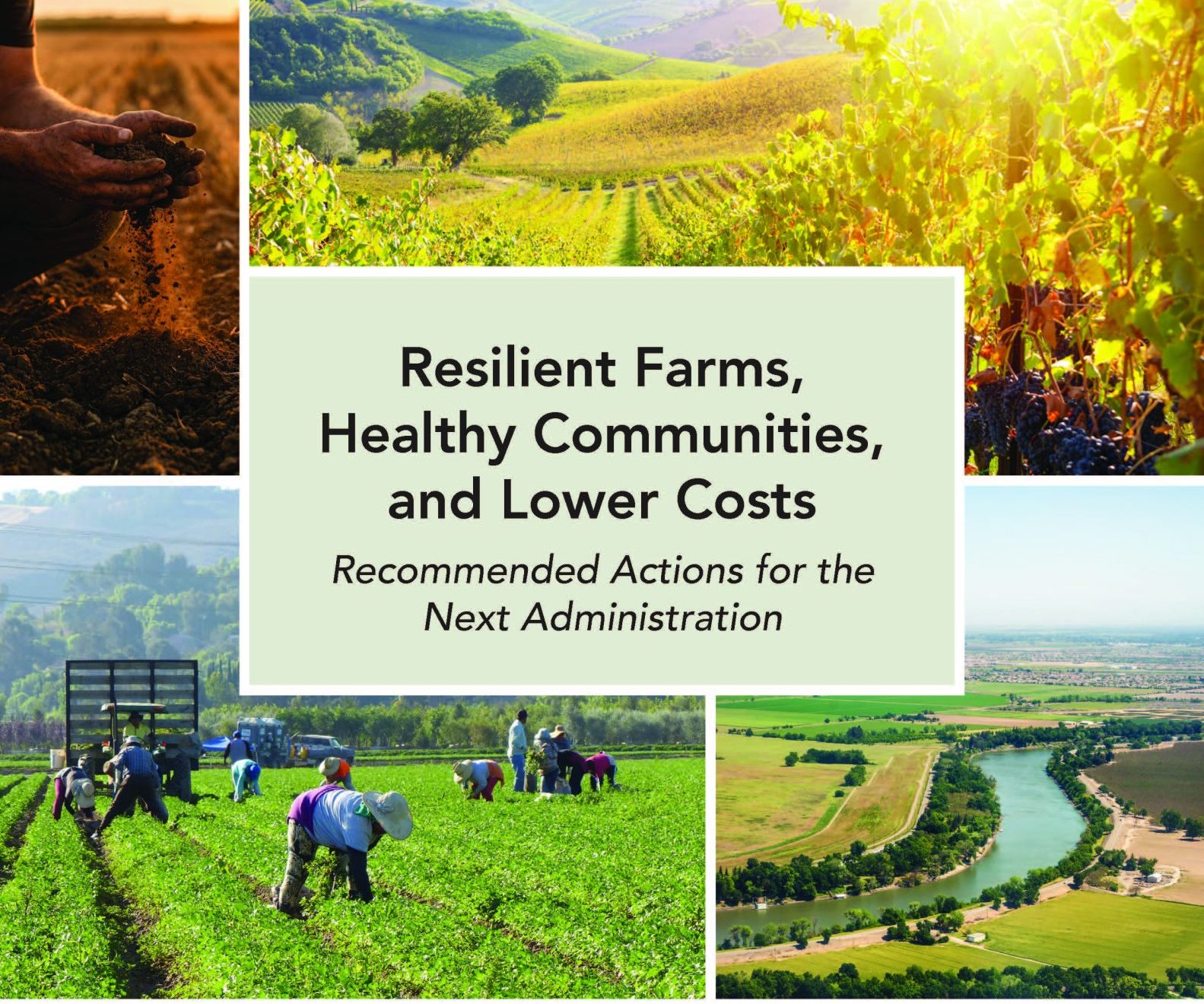

CalCAN Releases Recommendations for the Next Governor and Administration
septiembre 30, 2026


Suscríbase a nuestro boletín
"*" indica los campos obligatorios