


Dairy Producers Show Policymakers that AMMP Funding is Critical to Meeting Methane Reduction Goals and Staying Viable in California
-

abril 17, 2026
-

CC Ciraolo
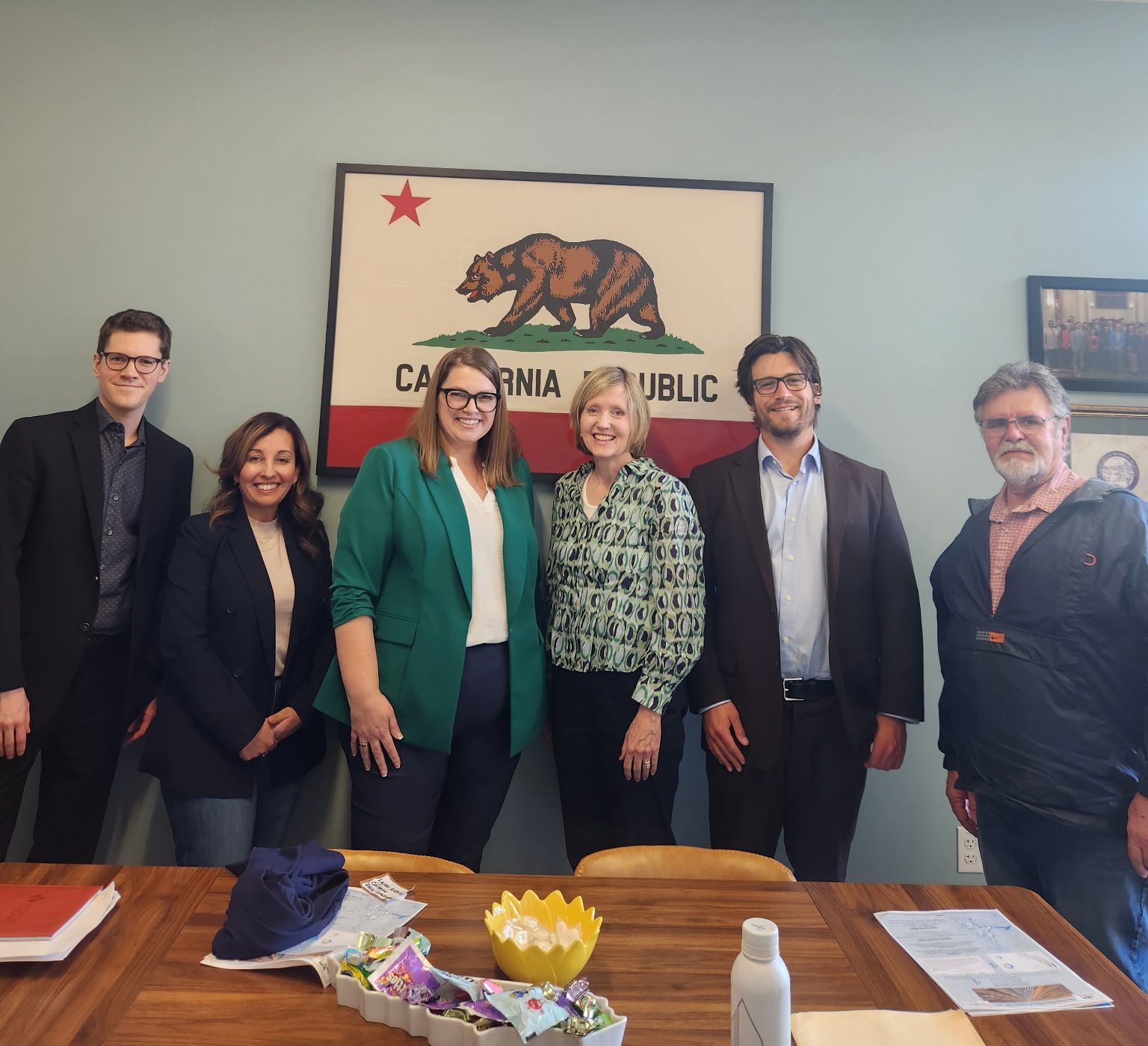
On April 8, dairy producers and advocates from CalCAN and the California Dairy Campaign met with more than twenty legislative offices to advocate for AB 2100 (Connolly). AB 2100 would convene a task force to analyze the role of alternative manure management in achieving California’s climate and environmental goals and recommend improvements to state plans and incentive programs. This proposed legislation comes after a recent CalCAN study found that the methane reduction potential of CDFA’s Alternative Manure Management Program (AMMP) is underestimated and that the program is more cost-effective than recognized. Using updated calculations, AMMP is the fourth most cost-effective California Climate Investments program tracked by CARB.
Before driving to Sacramento to meet with policymakers, dairy producer and Clover field representative Tim Kehoe spent his last morning on the Marin County dairy farm that three generations of his family operated for over 100 years. Five other dairies and six ranches in the Point Reyes National Seashore have shuttered after a settlement with The Nature Conservancy. Lisandra Vitornia drove up to Sacramento from Merced County, where she and her husband sold their family dairy last month. Vitorino said a lack of processing facilities contributed to the difficulties of competing with larger operations in the Central Valley.
California set a 40% methane reduction target for the dairy and livestock sector by 2030 under SB 1383. To support small and medium-sized dairy producers in meeting this target, in 2017 CalCAN successfully advocated for starting AMMP to give grants for installing equipment to reduce on-farm methane emissions. Statewide, demand for AMMP has consistently outpaced funding by an average of 200-300 percent. AB 2100 helps bridge the demand gap by taking steps to improve state planning and support for alternative manure management strategies while addressing barriers to project approvals. AMMP also helps producers reduce nitrate contamination in drinking water and meet a growing demand for compost supporting organic transition targets identified in AB 1757.
“The dairy industry has worked really hard to step up [to emissions targets] and help reduce methane emissions,” said Sonoma County dairy owner Doug Beretta. “AMMP is a win-win; a win for the farmer, a win for the environment and consumers.” Beretta shared multiple benefits he’s seen from alternative manure management. After installing manure separators and automatic scrapers on his operation, he’s noticed a huge improvement in cow health, particularly the feet and legs. “We separate the [manure] solids and liquids and compost the solids for cow bedding instead of trucking sand from three hours away. The cows love laying in the softer, warm bedding. With the liquid manure, we’re able to add it to our pastures and fertilize when we really need it.”
Beretta noted that the technical assistance support he received from the Marin Resource Conservation District in applying for AMMP funding was critical. He also said that AMMP has changed how he will approach manure management in the future, even once the grant has ended. “With the AMMP equipment, once you change your practices, you don’t go back to what you’re doing before. If a separator were to break, I’m going to replace it and continue.”

Dairy owners and advocates were met with interest and support from policymakers and their staff. Assemblymember Zbur’s Legislative Assistant Cole Klein remembered touring a Clover facility a few years back. “I saw how dynamic each of these dairy operations is, much more than people might expect. It’s really impressive.” He remembered seeing the separators in action and the composted dry manure. Klein has staffed representatives in the Central Valley and Los Angeles. “These agricultural issues aren’t just for rural voters and representatives,” he said, “they affect all of us.”
Just a few days after lobby day, AB 2100 cleared its first policy committee hurdle in the Legislature. The bill was placed on the Assembly Natural Resources Committee’s consent calendar and advanced without recorded opposition. The outcome was an encouraging sign that lawmakers are hearing the message dairy producers and advocates brought to Sacramento: alternative manure management is an important climate solution that can also help keep dairy producers viable in California. AB 2100 now heads to the Assembly Appropriations Committee.
For more information about AB 2100 or CalCAN’s work on alternative manure management, contact Colton Fagundes: colton[at]calcliamte ag.org
Descubre más desde CalCAN - California Climate & Agriculture Network
Suscríbete y recibe las últimas entradas en tu correo electrónico.
Artículos relacionados

CalCAN Farmer Advisor Profile: Linda Chu
agosto 21, 2026
CalCAN Stewardship Council Profile: Jo Ann Baumgartner
julio 16, 2026

CalCAN Stewardship Council Profile: Arohi Sharma
junio 24, 2026


Suscríbase a nuestro boletín
"*" indica los campos obligatorios