


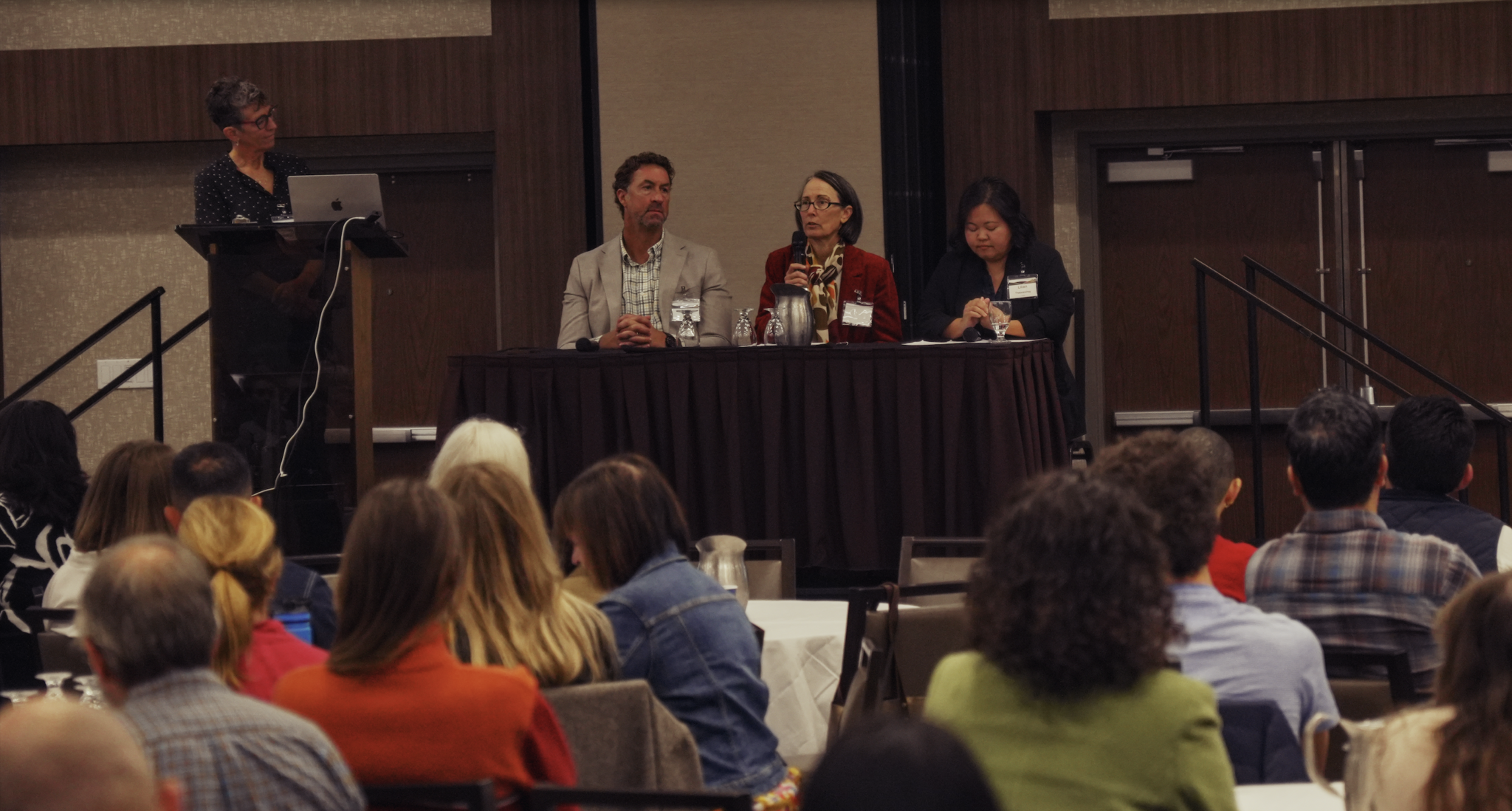
Since our founding in 2009, CalCAN has organized nine California Climate and Agriculture Summits, and November 9th was the first time we held it in the San Joaquin Valley. The conference byline was “San Joaquin Valley perspectives. Statewide agricultural solutions.” The event was enthusiastically received and sold out at the cap of 300 attendees, approximately half of whom came from the Central Valley. The program covered a wide range of topics (complete list here) and featured more than 60 presenters, almost all of whom are based in the Valley.
Diverse perspectives and expertise are essential ingredients in CalCAN’s approach to advancing climate and agriculture policy that is grounded in science and practice. Just over a quarter of conference attendees were farmers or ranchers, one-third were non-profit organizations and advocates, and one-third were researchers and technical assistance providers or other agriculture professionals, along with some businesses and state agency representatives. Summit attendees consistently share how much they appreciate interacting with the variety of people at our conferences, and this year was no exception.
In listening to our network of partners in the San Joaquin Valley, we know that California farmers face some big challenges and problems, and we organized the event around these three themes:
- Record high input costs, especially for fertilizer, water, and labor
- Complex new regulatory pressures (for example groundwater use restrictions under the Sustainable Groundwater Management Act or SGMA, a new Dairy Order intended to reduce groundwater nitrate contamination from dairy manure, and a ban on agricultural burning)
- More extreme weather such as spring heat waves and this year’s predicted super El Niño
We asked presenters to consider these challenges and respond with their ideas about how agriculture can innovate, adapt, survive and thrive, what they are trying on their farms, and what technical assistance providers, researchers and policymakers can do to support the necessary solutions.
“Farmers need consistency and incentives available on their timelines. When the incentives are irregular or undependable, or they have to apply at the wrong time of year, the grower can’t factor it into their planning.”
— Tanya Gemperle, Sustainability Manager, Gemperle Family Farms
The opening plenary session was titled “Meeting Challenges with Innovation: Valley Farmers Discuss the Economics of Climate Smart Agriculture,” and featured a panel of three farmers with different scales, crops, and business structures. Justin Wylie, owner of Wylie Farming, grows primarily pistachios and citrus which he is gradually transitioning to organic and regenerative practices that increase soil nutrients by avoiding bare ground using cover crops. He spoke about the potential for recharging groundwater reserves during wet years and increased soil moisture retention when it’s dry.
Christine Gemperle, an almond producer on a family orchard near Modesto said “I’m not spending less money on production but I am changing how I divvy it up. I’m spending more on soil health and nutrition because healthier plants resist pests and diseases better, so I need to spend less on pesticides and fungicides.”
Giving credit to the state’s climate smart agriculture programs, Lilian Thaoxaochay, whose family runs a diversified vegetable and herb farm near Fresno, stressed the importance of the water conservation program (SWEEP) and the Healthy Soils Program which have “made our farm incredibly resilient, productive, and efficient. This kind of long-term investment is critical.”
In a workshop about optimizing climate resilience in almond production, Andrew Caroll of EcoThrive Farm Management was one of the speakers. He described how many years ago he tried cover crop plantings and off-ground harvesting, and found increased soil water retention and reduced dust. He also had to spray for mites only twice in nine years. He said, “People in the Valley are tired of the way we are harvesting our almonds with the dust in the air every fall during harvest season. We are paying a high price as a society. Something has to change.”
One of the workshop sessions focused on the specific climate-related concerns and approaches of small and diversified farmers in the San Joaquin Valley. Jessie Kanter, Agriculture and Rangeland Program Manager with the Sierra Resource Conservation District said, “We need to design our agricultural systems around the people working the land.”
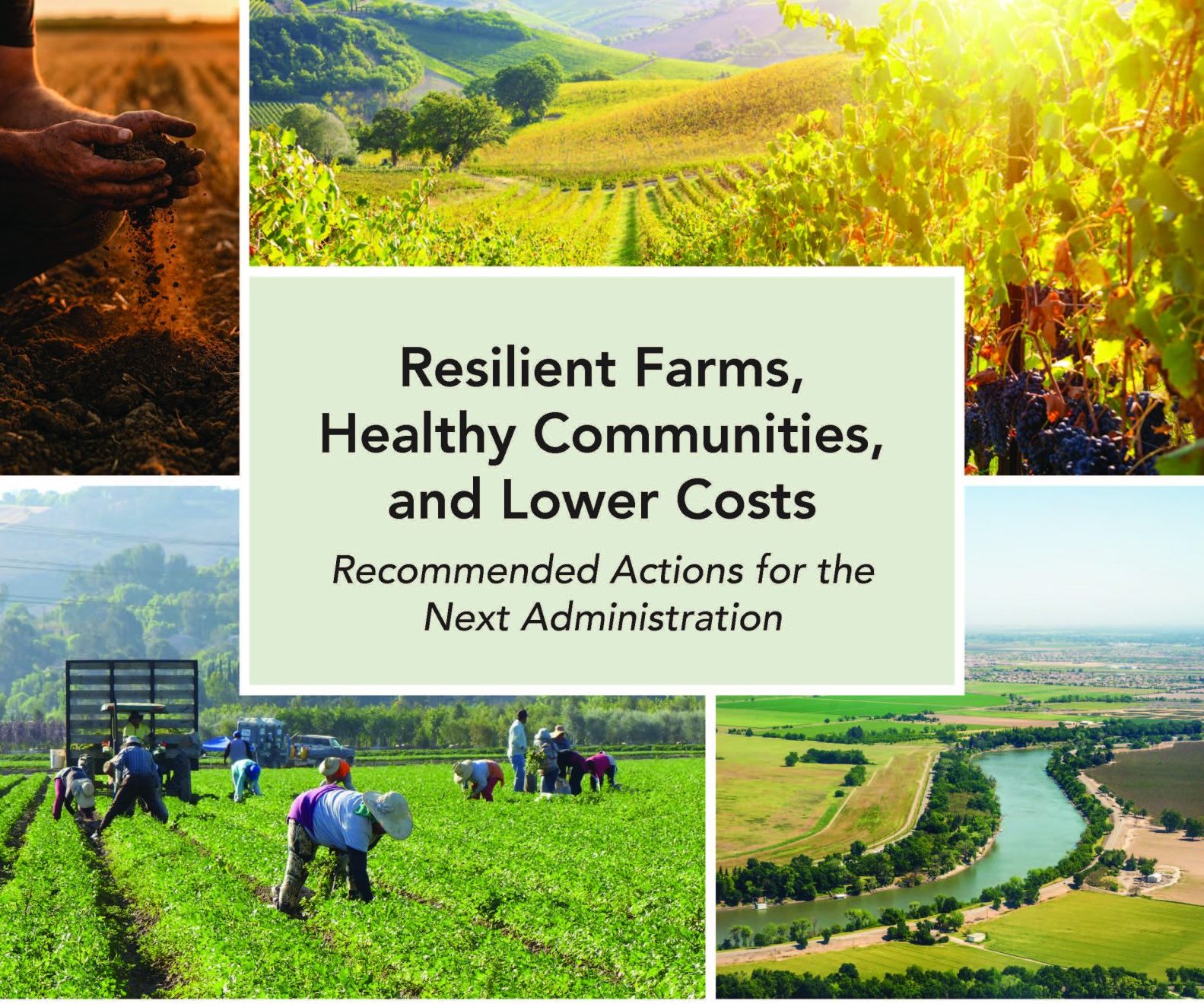
The focus of this conference was mirrored in a recent set of recommendations to the incoming Governor Becerra that CalCAN released in September: Resilient Farms, Healthier Communities, and Lower Costs. It lays out a series of actions the Governor, the next Secretary of Agriculture and the rest of his administration can take to move towards a future where California farms are resilient to economic and climate shocks, our communities have clean air and water and access to abundant healthy food, and costs are lower for farmers, families, and governments.
For more information on the event, please see this article in AgriPulse.
We are deeply grateful for the financial support of more than 30 organizations, agencies, farms and businesses that made the conference possible and accessible.
Descubre más desde CalCAN - California Climate & Agriculture Network
Suscríbete y recibe las últimas entradas en tu correo electrónico.
Artículos relacionados

CalCAN Farmer Advisor Profile: Rebekka Siemens
noviembre 03, 2026

CalCAN Releases Recommendations for the Next Governor and Administration
septiembre 30, 2026


Suscríbase a nuestro boletín
"*" indica los campos obligatorios