California Climate & Agriculture Network

Advancing policy solutions at the nexus of climate change and sustainable agriculture

  • Home
  • About CalCAN
    • CalCAN’s Role
    • Contact
    • Our Team
    • Donate
  • Our Work
    • Farmer Stories
    • CalCAN Fact Sheets
    • Ready…Or Not?
    • Recommendations to Governor
    • Videos
      • CalCAN Workshop Videos
      • CalCAN Summit 2011
      • CalCAN Summit 2009
  • AB 32
    • Cap-and-Trade Investment Plan
    • California Air Resources Board
    • Carbon Market
  • Farmland Protection
    • Triple Harvest
    • CA Farmland Protection Act (AB 823)
  • Renewable Energy
  • CalCAN in the News
    • Media Coverage
    • Blog
    • CalCAN Newsletter Archive

Climate Lessons from the Green Revolution? The problem with false choices.

August 19, 2010 by Jeanne Merrill Leave a Comment

A new study from Stanford University suggests that the Green Revolution is responsible for avoiding significant greenhouse gas emissions from agriculture.  But one has only to read the article with a critical eye to realize that the researchers’ assumptions are flawed.

The study’s authors compared agriculture’s current global greenhouse gas emissions with the GHG emissions under two hypothetical models.  Both hypothetical models looked at what would happen to GHG emissions if agriculture had to rely upon meeting world food demands without the benefits of Green Revolution technologies.  In one model, living standards were kept at 1960s levels and the other assumed the same standards of living we have today.

The models assumed that the only alternative to using the Green Revolution technologies of intensified use of pesticides, synthetic fertilizers, irrigation and hybrid seeds was to expand farming into marginal areas, such as forests and lands with poor soils. The result?  GHG emissions under the two models of farming without the use of Green Revolution technologies show much higher GHG emissions than what global agriculture emits today.  The study’s conclusion? The Green Revolution has been a good deal for the climate.

Unfortunately, the study’s unlikely scenarios tell us very little about GHG emissions from agriculture and the opportunities to achieve GHG emission reductions from agriculture and move toward sustainable farming systems.

The researchers note that in developing their climate models for their two hypothetical scenarios, they did not include GHG emissions from livestock, pesticides, fuel, machinery and burning of agricultural residues. Yet, these are significant sources of GHG emissions in agriculture that give us a more complete picture of agriculture’s climate footprint.  Since the 1960s, intensification of livestock confinement has increased significantly and with it has come an increase in potent greenhouse gases – methane and nitrous oxide (25 and 300 times more potent than CO2).  In California, GHG emissions from livestock account for a half of the state’s agricultural GHG emissions.

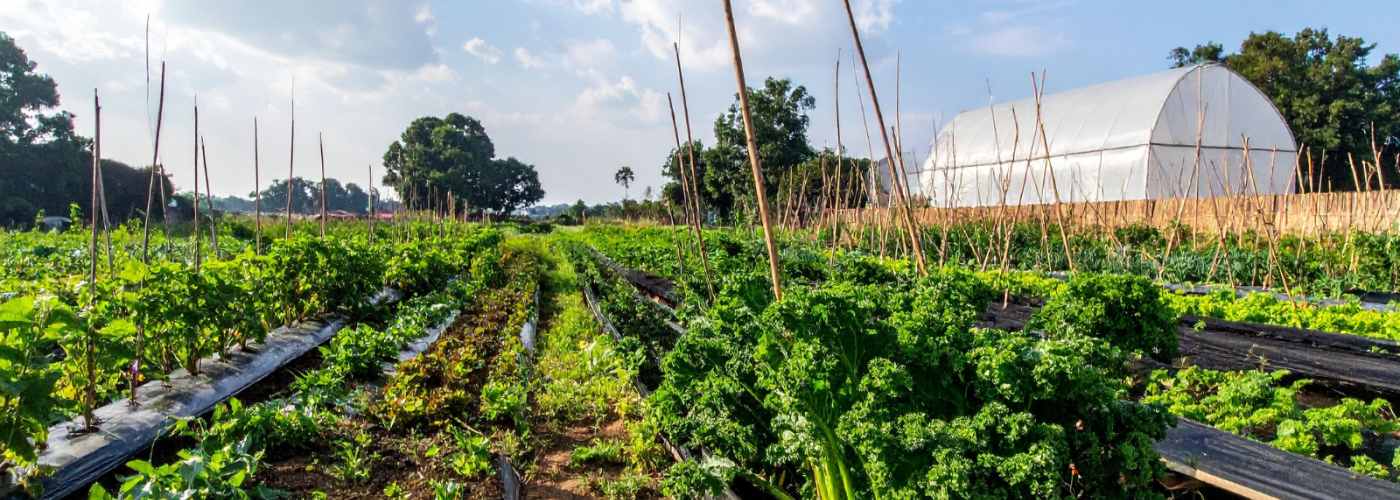
The study also ignores the most significant alternative to the Green Revolution – sustainable agriculture.  Our modern sustainable agriculture movement was born in response to the Green Revolution.  Rather than rely on toxic pesticides, synthetic fertilizers and hybrid and GMO seeds that threatened their health and threw off the ecological balance of their farms, sustainable and organic farmers shunned Green Revolution logic and developed farming systems based on ecological principles without the heavily reliance on synthetic, fossil fuel inputs.  And the climate benefits are clear.

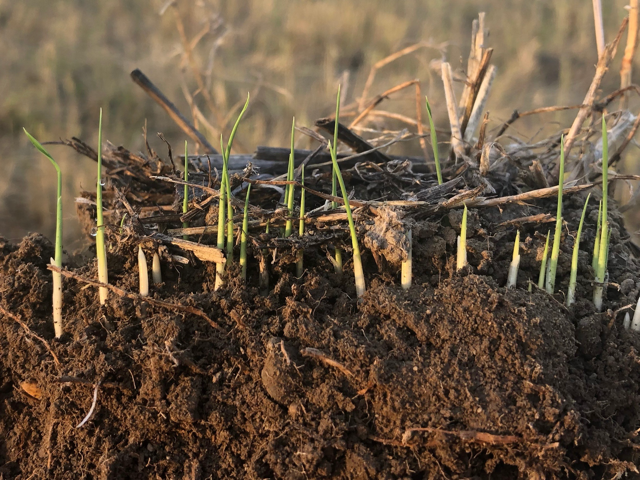
Photo courtesy of USDA NRCS

A United Nations FAO study found that organic agriculture is 30 percent less energy intensive than its conventional counterpart. A UC Davis study funded by the California Energy Commission, found that organic soil management strategies (e.g. cover cropping, composting) offer some of the best strategies for reducing GHG emissions and sequestering atmospheric carbon in our soils.

The Stanford study does offer one important climate lesson – the expansion of agricultural production into marginal lands comes with it the risk of significant GHG emissions.  As we develop our agriculture and energy policies – particularly our biofuels policy – we should take care to avoid displacing food and feed production in the U.S. that drives the clear cutting of tropical forests to make way for increased grain production.

Share with your networks ...
  • Facebook
  • Twitter
  • LinkedIn
  • Digg
  • StumbleUpon
  • del.icio.us
Filed Under: General Information Tagged With: climate change, climate models, green revolution, organic agriculture, Stanford University

Speak Your Mind Cancel reply

*

*

HTML tags are not allowed.

Budget Surplus,Climate Action Deficit

On May 14th, Governor Jerry Brown released the latest version of his 2013/14 budget, which will now be debated and revised by the legislature in anticipation of their …
Learn More...

What’s New

  • New fact sheets on climate adaptation: Farming for Success in the 21st Century
  • Triple Harvest: Farmland conservation for climate protection, smart growth & food security
  • CalCAN Summit 2013 Presentations Available
  • Media Coverage

“If fundamental climate change mitigation and adaptation goals are to be met, international climate negotiations must include agriculture.”

— International Food Policy Research Institute.  March 2009

Copyright © 2010 California Climate and Agriculture Network. All rights reserved. | Contact Us

Site Hosted by Gaiahost | Site by Deeper Shades Design

Return to top of page

Copyright © 2013 · Delicious Theme on Genesis Framework · WordPress · Log in